The Philadelphia Lazaretto Item Info
- Title:
- The Philadelphia Lazaretto
- Creator:
- Emma H
- Date Created:
- 11/23/2025
- Subjects:
- lazaretto architecture
- Location:
- The Philadelphia Lazaretto
- Latitude:
- 39.8608073
- Longitude:
- -75.3001438
- Rights:
- CC BY-NC-ND
- Standardized Rights:
- https://creativecommons.org/licenses/by-nc-nd/4.0/
The Philadelphia Lazaretto
Item
The Lazaretto Main Building in Tinicum Township is a late eighteenth century quarantine complex established to inspect, detain, and treat arriving passengers and cargo suspected of carrying contagious disease. It is widely regarded as the oldest surviving quarantine hospital in the United States. Its original institutional purpose was to protect the growing port city of Philadelphia from imported epidemics.
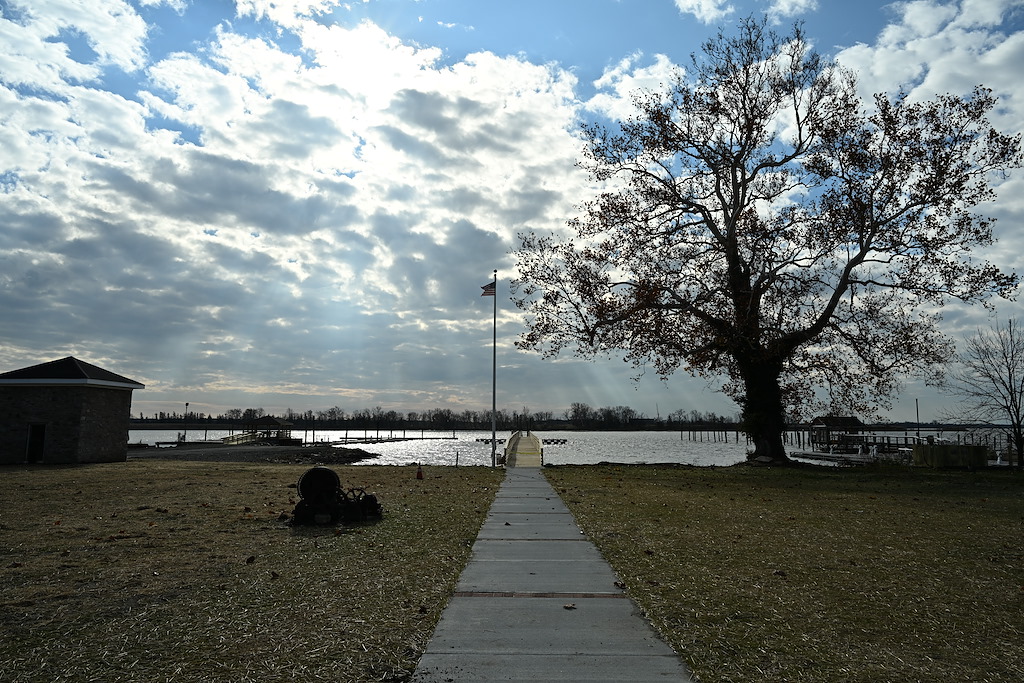
The Lazaretto stands at 97 Wanamaker Avenue in Essington, Pennsylvania, on the Delaware River in Tinicum Township, just west of the Philadelphia International Airport. Its riverfront siting was intentional and essential to its original public health function. As the first mandatory point of contact for all vessels bound for the port of Philadelphia, the Lazaretto’s location allowed inspectors to board arriving ships directly from the shoreline, creating a controlled buffer between the city and incoming maritime traffic. This spatial placement transformed the river into both the station’s access route and its architectural foreground, physically marking the boundary between the urban population and the perceived threat of contagion arriving by sea. The complex remains in its original location, visible from the river and preserved as a historic site following extensive advocacy and municipal intervention that prevented demolition in the late twentieth and early twenty-first centuries.

Purpose and History
The Lazaretto was created in 1799 as a permanent quarantine station in response to repeated port-borne epidemics, especially the devastating yellow fever outbreak of 1793. Built by the Philadelphia Board of Health, it originally served to inspect arriving ships, separate and house sick or suspectedvpassengers and crew, and disinfect or hold cargo until it was declared safe. As the Encyclopedia of Greater Philadelphia notes, “the Lazaretto operated under the authority of the Board of Health of the city of Philadelphia until 1893, when the state took over and ran the quarantine station through 1895.”1 Even with this administrative change, its core purpose of protecting the city from infectious diseases such as yellow fever, typhus, and plague remained the same.

After its quarantine role diminished, the Lazaretto’s use changed repeatedly. It operated at various times as a municipal hospital, then from 1898 to 1915 as the summer clubhouse of the Philadelphia Athletic Club. In the early twentieth century, it became a seaplane base and flight school, with additional military or industrial uses during World War I.2 By the late twentieth century, the property faced redevelopment pressures, but preservation efforts led to its purchase by Tinicum Township in the early 2000s.
Today, the Lazaretto is a restored historic site, maintained by local organizations and used for township offices, public programming, and cultural purposes, including housing the Italian Culture Center of the Delaware Valley. Over its lifetime, ownership has shifted from federal, state, and port authority control to local stewardship and nonprofit involvement.
Author, Description, and Creation Process
Archival and published sources attribute the Lazaretto’s creation to the Board of Health of the City of Philadelphia rather than to a single named architect. The Board’s post-1793 public health reforms directed the siting and construction of a permanent quarantine station in 1799. Public health authorities designed the program and oversaw construction to meet functional requirements for inspection, detention, and the separate storage of goods. Where later nineteenth century modifications occurred, municipal officials, hospital superintendents, and local contractors executed those changes. This municipal provenance aligns the Lazaretto with a broader pattern of civic public health architecture initiated by governments rather than by private patrons or celebrated architects.

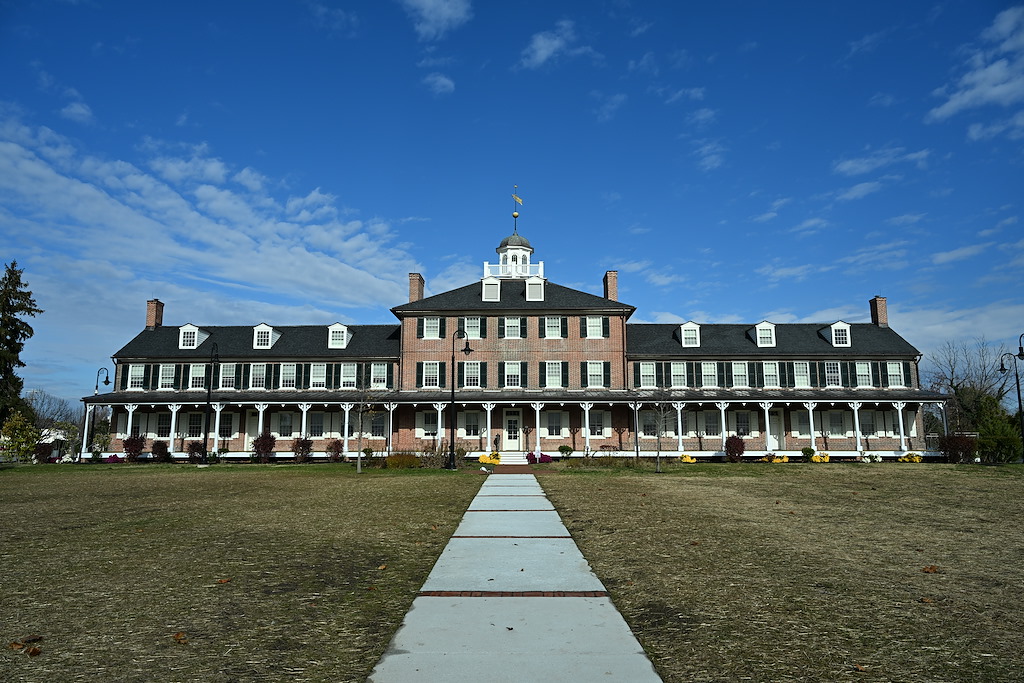
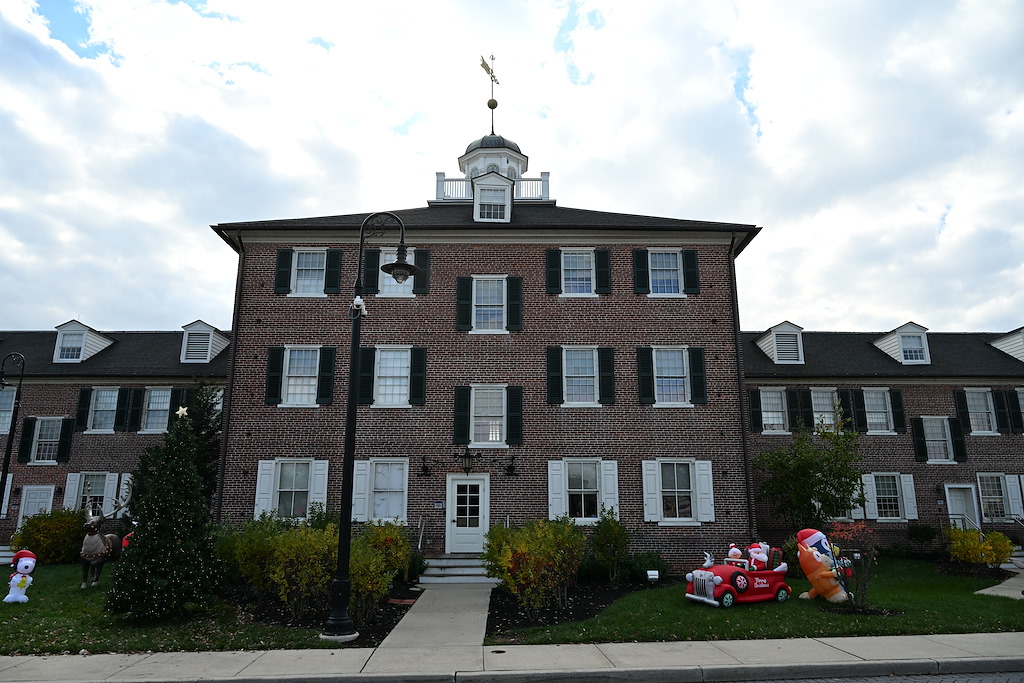
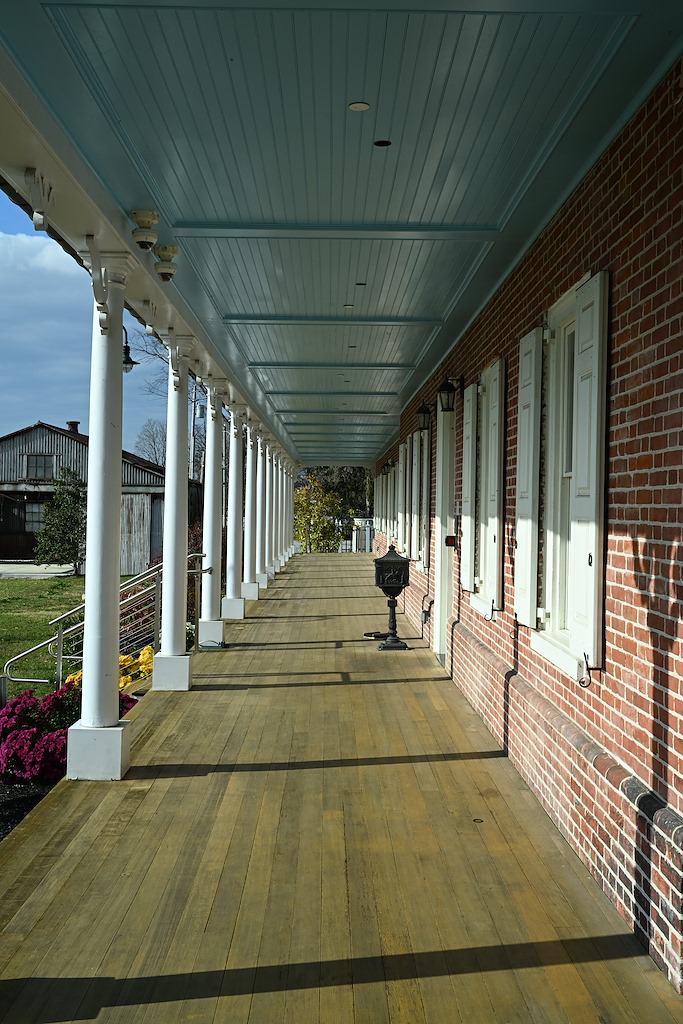
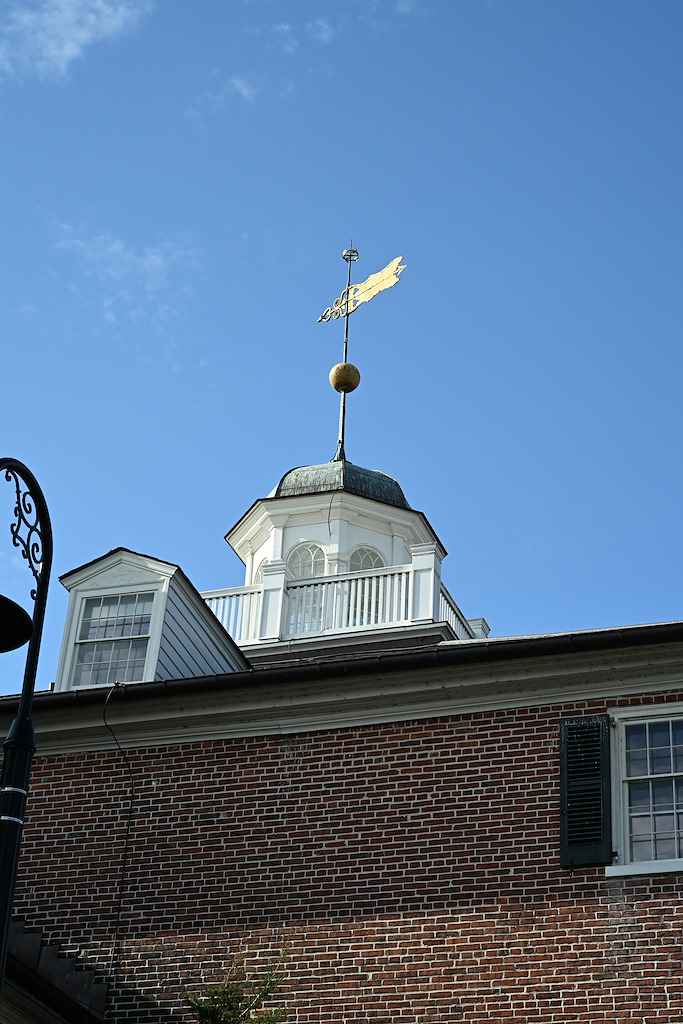
The Main Building of the Lazaretto, constructed around 1799 and renovated in 2020, is a large, symmetrical, late Georgian structure built of red Flemish-bond brick and oriented toward the Delaware River. Its architectural character aligns with prominent Georgian medical buildings of the period and “thev building is reminiscent of the Pennsylvania Hospital on Eighth and Pine Streets in Philadelphia, Pennsylvania—the oldest hospital in the nation, the Pennsylvania Hospital is considered one of the finest examples of Georgian medical architecture” (Sell, 2005). This connection underscores the Lazaretto’s use of balanced proportions, formal detailing, and orderly composition to convey authority and civic purpose. Its composition centers on a slightly projecting pavilion flanked by two wings, unified by a continuous water table and regular rows of sash windows fitted with wooden shutters held by iron shutter dogs. A colonnaded porch lines the first story of the entire south façade. The pavilion rises three and one half stories, while the wings extend two and one half stories. The south façade features a central doorway with a fanlight, vertically aligned sash windows, and dormers punctuating the pitched roofs. Each wing contains three evenly spaced dormers with eight over eight sash windows. The hipped roof of the central pavilion, now covered in grey shingles, supports two south-facing vent dormers. Above the roof stands an octagonal cupola with arched windows and a ball and weathervane, and several brick chimneys rise from the roofline. The wings continue the same materials and fenestration patterns, each with a fanlit doorway and rows of twelve over twelve sash windows. The rear elevation largely follows the organization of the façade but contains a few distinct features. The center pavilion projects farther outward, a single dormer appears on each of its east and west roof slopes, and another single vent dormer protrudes from the north roof slope. The center bays of the pavilion and wings are set lower to light interior stairwells. A decorative iron light fixture remains mounted on the north façade.
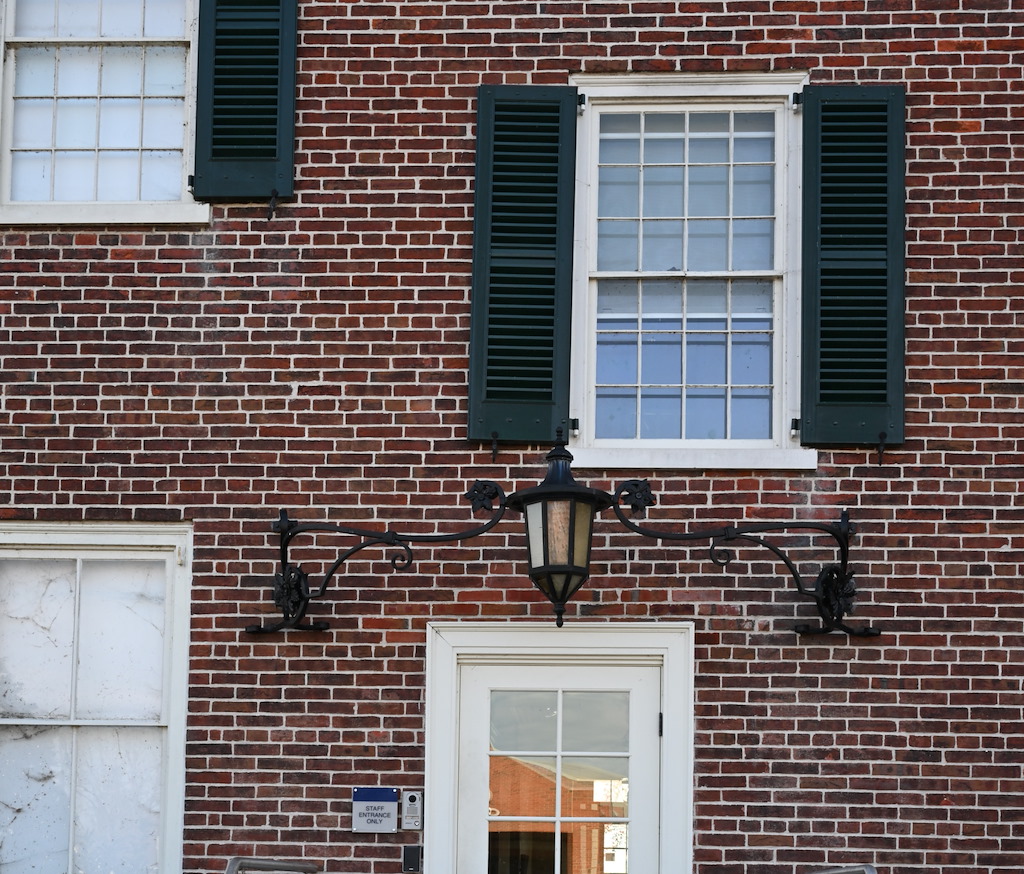
Primary construction employed locally available materials and traditional late eighteenth century techniques. The main block uses brick laid in Flemish bond on a stone foundation, timber framing for floors and roof. Construction was arranged under a municipal contract and supervised by representatives of the Board of Health; day to day work would have been executed by local bricklayers, carpenters, and masons familiar with Georgian building conventions. Later nineteenth century and twentieth century repairs reused similar materials where possible, and twentieth century rehabilitation has respected the historic fabric while making the building serviceable for new civic functions.
Interpretation
The Lazaretto’s physical design reflects cultural ideas and mixed feelings about disease, trade, and government power. Its architecture shows order, discipline, and confidence in official authority. The building’s symmetry and structured entranceways project a sense of organized, controlled response to public health risks. The site conveys an atmosphere of order, cleanliness, discipline, and official authority, and it serves as a material record of early public health infrastructure, marking the boundary between the safer city interior and the risky, potentially infectious outside world. The Lazaretto also highlights the tension between protecting public health and supporting a busy port economy: quarantine helped limit disease but also slowed travel and imposed financial costs on merchants and newcomers. As a restored historic site, it encourages us to consider the human impact of disease-control measures, especially on immigrants and sailors who were held or processed there.
Comparative analysis: Lazzaretto Vecchio (Venice) and the Lazzaretto of Ancona (Vanvitelli)
Architectural Comparison
The Italian lazzaretti and the Philadelphia Lazaretto shared similar goals, and these shaped their designs. Because both needed to quarantine people and goods, they used clear plans, controlled circulation, and layouts that separated functions. Venetian examples such as the Lazzaretto Vecchio, founded in the fifteenth century on an isolated lagoon island, used physical distance from the city to reinforce their role as a sanitary barrier. Its hospital buildings and burial areas followed a basic logic of separation from urban life and on-site management of disease.3
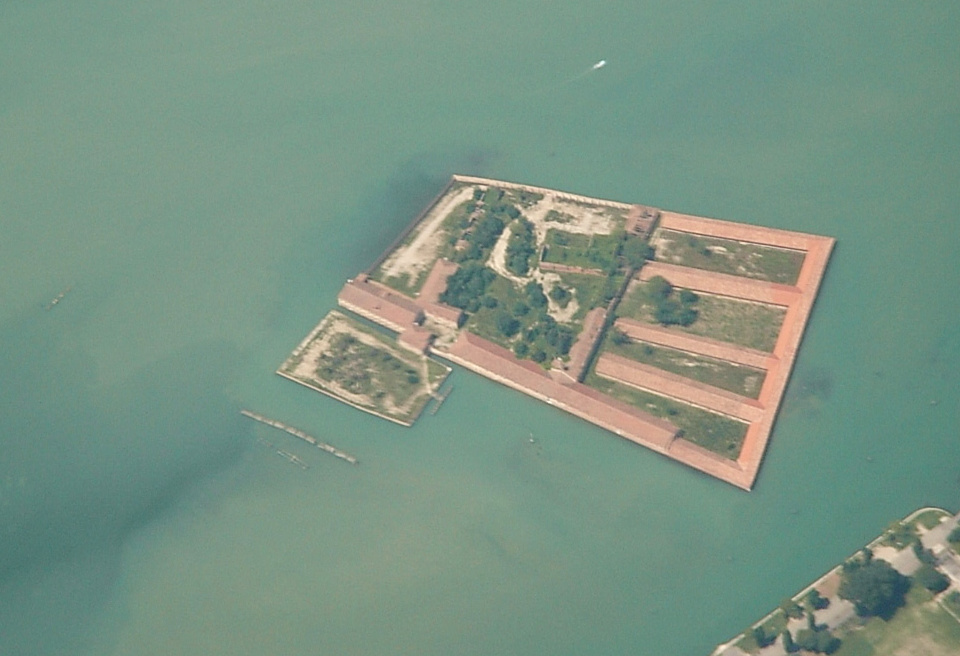
The eighteenth-century Lazzaretto of Ancona, designed by Luigi Vanvitelli as the Mole Vanvitelliana, expressed Enlightenment ideas of order.4 Its regular pentagonal plan on an artificial island used symmetry and geometry to direct movement and support oversight.

The Philadelphia Lazaretto, though less ornate than the Mole Vanvitelliana, followed the same principles. Its symmetrical Georgian main building and the separation of functions across the site use geometry and repetition to signal institutional order and to support the quarantine practices it was built to carry out. Compared to the other lazaretti, the Philadelphia Lazaretto differed in form and context: its architecture was less monumental and more pragmatic, constructed in brick and wood rather than stone, reflecting both the colonial building traditions and the new republic’s emphasis on civic utility over display. While the Italian lazaretti projected the power of long-established maritime republics, Philadelphia’s design reflected an emerging democratic order and a local response to recent epidemics rather than an imperial maritime infrastructure.
Site and Isolation: River and Sea
A main difference is where each quarantine station was located and how they used water for control. Venetian lazzaretti were built on small lagoon islands at the edge of the city, creating a strong physical separation from daily urban life. Ancona’s Mole Vanvitelliana followed the same idea: it sits on an artificial island linked to the mainland only by bridges, highlighting both its exposure to the sea and its controlled access points.
The Philadelphia Lazaretto used a similar strategy but in a different setting. Its position on the Delaware River made water the main approach route and the first point of inspection. But unlike the isolated Venetian islands, the Lazaretto stood closer to a major port and an expanding inland region. This meant its work was more connected to inland travel, trade, and migration.
As a result, the experience of isolation differed. Venetian lazzaretti could keep arriving ships completely apart from city life. The Philadelphia Lazaretto acted more as the last checkpoint before entering a city tied to both Atlantic trade and continental movement. In this way, Philadelphia adapted the Italian lazzaretto model to North American geography and economy while preserving the same basic purpose of quarantine.
Conclusion
The Philadelphia Lazaretto reflects the public health beliefs of its time. Its symmetrical, ordered architecture, its riverside orientation, and the programmatic clarity of separate functions all convey an institutional response to epidemic risk that linked municipal authority, commercial imperatives, and evolving public expectations about health governance. Comparative attention to Venetian and Anconitan lazzaretti demonstrates that the Philadelphia example participates in a transnational repertoire of quarantine design even as it responds to local conditions of commerce and settlement. As a preserved cultural landscape, the Lazaretto prompts reflection on the human experiences contained within medical architecture and on the tensions that arise when public health interventions both protect and constrain the flows of people and goods that sustain urban life.
Footnotes
Works Cited
Admin.“Making History: The Past, Present, and Future of the Philadelphia Lazaretto.” Insights (Milrose Consultants), May 9, 2025. https://www.milrose.com/insights/making-history-the-past-present-and-future-of-the-philadelphia-lazaretto.
Barnes, David S. “The Lazaretto.” America’s Oldest Quarantine Station. University of Pennsylvania. https://www.sas.upenn.edu/~dbarnes/Lazaretto.html.
Eisenhower, Lance R. “Lazaretto.” Encyclopedia of Greater Philadelphia.https://philadelphiaencyclopedia.org/essays/lazaretto/.
“Explore the Italian Cultural Center of the Delaware Valley at the Historic Lazaretto Building.” ICCDelVal. https://iccdelval.org/.
“Friends of the 1799 Lazaretto.” Friends of the 1799 Lazaretto. https://www.1799lazaretto.com/
Gordon, Elana. “Preservation of the Lazaretto, America’s Oldest Surviving Quarantine Center, Finally Gets Underway.” WHYY , October 28, 2016. https://whyy.org/articles/ preservation-of-the-lazaretto-americas- oldest-surviving-quarantine-center-finally-gets-underway/.
“History of the Lazzaretto Vecchio.” Lazzaretti Veneziani. https://lazzarettiveneziani.it/en/lazzaretti/history-lazzaretto-vecchio.Historic American Buildings Survey.ures/collection/hh/.
“Lazaretto.” Library of Congress. https://www.loc.gov/pict
LPATT Board.”The Italian Lazarets of the Adriatic Sea.” PubMed Central (PMC), 2024. https://pmc.ncbi.nlm.nih.gov/articles/PMC9994823/.
“Lazzaretto of Ancona.” Wikipedia. https://en.wikipedia.org/wiki/LazzarettoofAncona.
“Lazzaretto Quarantine Station Historical Marker.” ExplorePAHistory.com. WITF, Inc. https://explorepahistory.com/hmarker.php?markerId=1-A-302.
“Lazzaretto Vecchio.” Wikipedia. https://en.wikipedia.org/wiki/Lazzaretto
“About the Lazaretto.” The Lazaretto. https://lazaretto.site.
“Mole Vanvitelliana: A Shelter from Epidemics.” Ancona Tourism / Riviera del Conero. https:// Vecchio. www.anconatourism.it/.
“Philadelphia Lazaretto.” Wikipedia. Last modified September 2, 2025. https://en.wikipedia.org/wiki/PhiladelphiaLazaretto.
Renaissance Lockdown: How Venice Tried to Control the Plague.” History Workshop, 2019. https://historyworkshop.org.uk/migration/venice-plague/.
Seindal, René.“Lazzaretto Vecchio – Six Centuries.” Venetian Stories Newsletter, October 10, 2023.https://venetianstories.com/venetian-story/lazzaretto-vecchio-six-centuries/
Sell, Rebecca H.“Chapter Three: Assessment of Cultural Significance.” In The Lazaretto: The Cultural Significance and Preservation Plan in the Burra Charter. University of Pennsylvania Scholarly Commons, 2005.
“Tiny Township Saves, Transforms Historic Quarantine Station.” AP News. https://apnews.com.
“What It’s Like to Tour Venice’s 14th-Century Quarantine Island.” Condé Nast Traveler. https://www.cntraveler.com.
Woods, Jeanette.“America’s Oldest Quarantine Hospital Tied to Philadelphia Yellow Fever History.” WHYY , January 9, 2014.whyy.org/segments/americas-oldest-quarantine-hospital-tied-to-philadelphia-yellow-fever-history/.