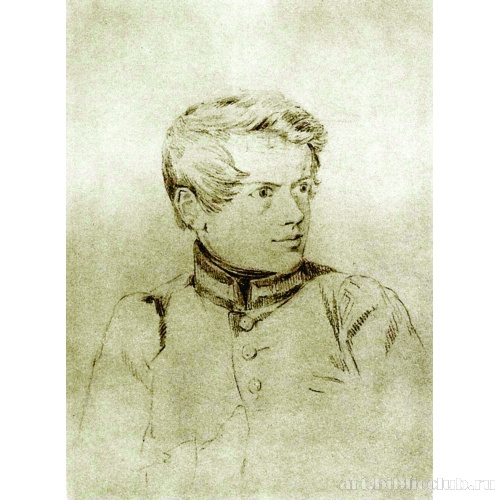
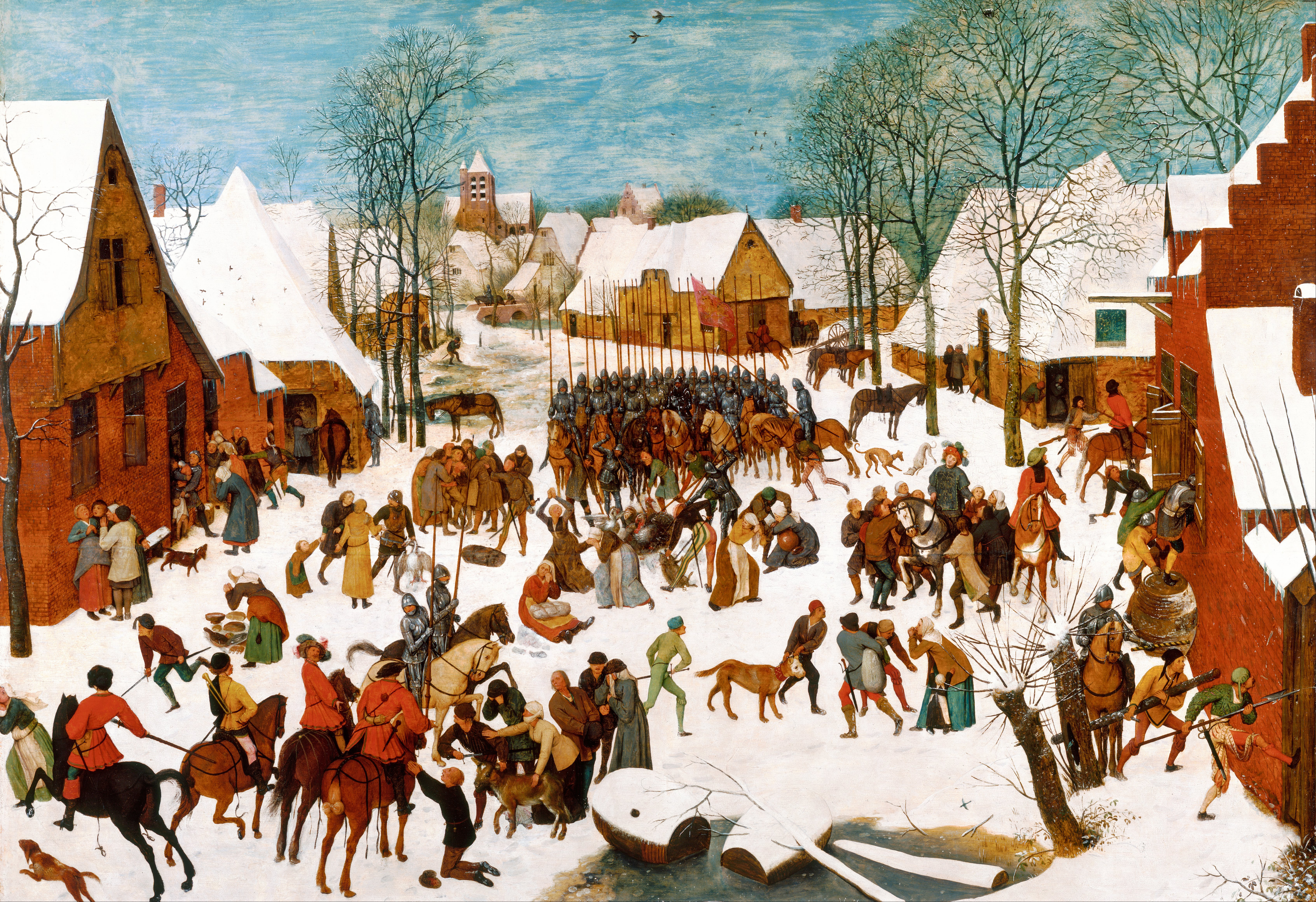
of deep at the time of flooding of the deep and shallow rivers. To be; . To live, to be, and to see how in ditches the wilts. To live and to be—. To live and to be—may they iridesce like mother-of-pearl: any icicle, any membrane. May , and may the latter hurry , . the distant silhouettes of the , and causing the folds of their consignment-store coats to flap. . May she work and may the voice of her horn, smudged by the , smudged , command the fussy scurrying of the , anxieties of the , and the mood of the . At first they were , but later, when she was named the head of the tower, they were gradually replaced by stately engineers. May the come, complaining in half whisper, with a lisp, about the shattered , shaky , and the expanses of its long-distancedness. May the , donning the tattered tailcoats of the , swing, wave their hands like the , scarecrows, and windmen-. —the blizzard kept gathering speed, kept acting out, becoming relentless and merciless. In the barracks people were . , sang in rooms a reprehensibly empty-headed , and her round photos, glued to the records, spun around, stuck on . from memory the bottom of the ravine, overgrown with , and ; the entire reservoir, crammed with the props of all possible in the season of watermelons and drizzling precipitations, shaped like , and the , who, at the whim of the artist, may sit on the stone slope of the dam, having raised up the collar of his pea jacket, , and read a navy-colored book—about the sea. , had a chaser, called her , and chewed over the same , . The bearings kept cracking, the kept heating up, the readings were announced, and before every bridge, before every tunnel, unfailingly, . a passenger station: a dilapidated pavilion with a cone-shaped false turret and a beer stand with a stream of ; the remnants of a monastery wall, the viaduct with a section of the highway, and the pond at the foot of a high embankment. At the neighbors’ raved an , and a , a , or a pounded the crumbling joists. May the hubbub steamily tumble out through the opened window vents and , swarm, ethereal and aloof, and later, with the husks of silence, with its clots, fall down on the alleys. May the gusts of the ground wind brush its remnants into the ravine, into the dark blue haze of the river torrent. , confessed the artist, flipped upside down, completely worn out and listless, , in the truncated storeroom of the who, in his spare time, collected candy wrappers. the heavy, nebulous, slovenly face of and . But he saw, he saw—on her meaty lips and droopy-lead lids flickered the of after midnight, when through sleep you will hear how, . Later, may her anthropomorphous shadow wander across the wall, searching for the of matches and for engineer’s cigarettes. or ? In any case, . But if who went out with that ship’s boy to that meadow, where the take their to play on swings, if she agreed to go there also with you, she would probably fly and squeal in a high voice with you too. You stood in the darkness of the forest, unseen. It was , and at the reservoir the sails were still present and the trainers on motorboats kept croaking commands for rowers into bullhorns. She squealed like in the field, when you walk across in , having set the traps for and cherishing in advance the real rifle, promised by the engineer. Or when , and the have been flying about, and the slips are filthy, and the rain and time cannot catch up with washing them off, and now and then a dead , a stiff , or a lifeless . May howl, running out on the dam, calling “Come home,” while the —may it blow in the darkness and extinguish for good the windows of the barracks, eye after eye, one after another. May the waves get bolder. The other ship’s boy, a veritable chimney , with the saddle like an old man, buzzing with the dynamo and flashing with the headlamp, may cough by in the direction of the expiration of the furlough. Masha was mending the engineer’s coat. The engineer was happy. He sat on the couch and read . Or the timetable. The blizzard was approaching. In the thickets of tubular fragile plants, with the open fractures smelling like the first frosts, in the thickets next to the muddy stream, prophesied the universal flood. There, , once—her notebook: . . In particular, it reported that Papa bought skates for , that , that granddaughter is young and grandmother vice versa, that sister is playing piano and brother bala—but instead of , to the middle of the notebook stretched a solid, uninterrupted , a of the pimply barrack life, overheard and written down by the true love of the who, years later, answering the reproaches of a special commission that up until now he has not presented to its attention a reasonable account of the hunting roundup, more precisely, of the circumstances accompanying the from the roundup, being, in essence, the necessary attributes of the return—since — answering the reproaches of the commission, he may reply: I do not perceive sufficient reasons, for the sake of which my impressions about such trivialities would be able to substantially help in the inspection’s work; therefore I would truly prefer to keep them exclusively to myself. However, if You so insist—please. We are returning at . You, I suppose, are already acquainted with each other or, , with this and are irrevocably enchanted by it, like I am, and thus reveal remarkable taste, , and an inclination for melancholic contemplation. There are, as a rule, several of us—huntsmen and up to . It is . In order not to attract the gawkers and not to lower the quality of the picture by , I am trying to stay at the end of the procession; therefore, ; . hats of the hunters—You are probably familiar with this heavy and firm but also fuzzy felt of our provincial factories, to which snow sticks in lumps with such a remarkable tenacity, whether it falls on the headgear or the headgear falls into a snowdrift—the gray hats of the hunters are pulled low, over their ears, as the saying goes, and that is why one can not see their napes, either. One of us, in addition to the usual equipment—a dagger, a game bag, and a spear—is burdened by our shared trophy: The had been slain already at . By the way, take a good look at our mongrels and . Horrendously long, ugly, curved monkey-like and resembling , do their tails leave at least a flicker of hope for pure blood? It is no secret—pitiful is the exterior of my hounds: skin and bones, and completely matted coats. By the way, there is among them one bloated, wobbly, with a hideously short snout—a matching , where, having assured us they would catch up soon, some huntsmen dropped in to wait out a very strong . Is there any need to mention that right now we are on the summit of a large hill, condemned, like the entire site, ? After leaving the tavern on the left, we have almost passed it and begin to descend into the valley. In front of us stretches a perennially familiar panorama. This is the dale of the river, and a town in this dale next to this river, and ponds, and barns in the distance, and the sky above everything listed. This is our country; we live here, and while some of us live in town, the others live in the village, beyond the . We easily distinguish the dike and the , the church and the horse carts on the roads, the library, the hospice, and the bathhouse. We see the steep roof of , and the market. And on the ice of the river and the ponds. Their voices and skates sound resonant, their faces are flushed. Here—brownish of leafless trees, resembling the fur of unknown animals; there—washerwomen, rinsing the linen in an ice hole. In addition, boats frozen into ice, and levees, and birds—oh, both on the branches and simply —, faded, discolored, or having completely replaced their whimsical garb with the modest feathers of . What a marvelous country, , a halts in admiration. The simplicity and modesty of the walnut only enhances the enchanting beauty of the landscape and the excellence of the . Of course, our sketch does not pretend to describe and evaluate all the other pictures exhibited at the : We will only stop for a moment next to some of them. . The canvas is to such a degree distinctive that one simply has to be amazed. It has been said that having finished the work, its author was literally shaken by the depth of his self-perception; success caught the artist completely unawares. Having unsociably locked himself in his , located at that time in the , he, after getting somnambulistically lost among with tiny blooms and mannequins indifferent to everything, and repeating ceaselessly stubbornly refuses to believe that it is not him there, in the corner, leaning over the easel, but only his image, even if it is extraordinarily similar to the original. And when his relatives, assisted by the gardener and the cutter, having broken the door, finally convinced the master in his own originality—he burst into tears. The color reproduction of will adorn the frontispiece of our monograph about this remarkable man; its publication is eagerly anticipated day in and day out. And how significant is the fact that the appearance of one of the subtlest, most refined realists of the recent past coincided with such a remarkable date as the . The artist himself thought that the mentioned coincidence was far from accidental and emphasized this on every appropriate occasion, seeing in it either the gesture of Providence or the digit of . Say, in one of his poems, the painter, with his characteristic candor, announces: Well, gentlemen, in the year from the invention of the pin 541, , approximately , at a considerable distance from any capitals, in the middle of Russia, and at the same time on the shore of , someone is drunkenly beating the . The has already forced the eyes to open wide, obscured the vistas, and abolished all traces of light. The silhouette of the musician is about to dissolve. For that reason, and tripping over the folds of the robe that gives an impression of being completely frayed, suffering from the chill emanating from the mossy stones of the cellar, shuddering from disgust at the sight of multiple , and , let us roll out into God’s world the —and let us finally knock out the . That is how, gazing through a small window during a relatively late hour of one of the pitiful days of another inclement year and trying to gather his thoughts, the hero of this story . , he philosophized, . .
в пору разлива глубоких и мелких рек. Быть; . Жить, быть и видеть, как по канавам жухнет . ; . Житьбыть — пускай переливаются перламутрово: любая сосулька, любое перепело́. Марии — , а той — торопиться на -склоне ж, . отдаленные силуэты , и раздувая полы их . , у самой границы . Служить, и голосу рожка ее, смазанному , смазанному, , — заведовать суетливой юркостью , тревогами , настроеньем . То были сначала , но позже, когда ее назначили главной в башне, их постепенно вытеснили степенные машинисты. Приходить , полушепотом, шепеляво жалующемуся на , на расшатавшиеся , на дальность маршрутов следования. , драные фраки — качаться, махать руками в подражание , пугалам и людям от ветряков — . В бараках . , пела в комнатах предосудительно , и круглые фото ее, наклеенные на пластинки, вертелись, насаженные на . по памяти дно оврага, поросшее , , все хранилище, загроможденное всевозможных в сезон арбузов и моросящих оков в виде , и , что по капризу художника пусть сидит, поставив торчком воротник , на каменистом откосе дамбы, и читает — про море. , закусывал, звал и пережевывал то же самое — , . Постоянно летели подшипники, горели , сообщались показания , и перед каждым мостом, перед каждым тоннелем неукоснительно . пассажирскую станцию: облупленный павильон с конусовидной фальшивой башенкой, пивной ларек с чередою , остатки монастырской стены, виадук и участок шоссе и пруд у подножья высокой насыпи. У соседей , и ли, ли, то ли трухлявые перекрытия. — вываливаться распаренно в фортки и , — несусветному, отчужденному, и выжимками тишины, ее сгустками, падать потом в аллеи. Поземке — сметать его в овраг, в муть стремнины. , перевернутая на другую сторону, совершенно заезженная и томная, признавалась артистка , в усеченном чулане , собиравшего к тому же . тяжелый, невнятный и неряшливый и . Но видел, видел — по мясистым губам, по налитым оловянным векам скользили за полночь, когда сквозь сон услышишь, . Позже человекообразной тени ее бродить по стене в поисках спичек и машиниста. или ? Во всяком случае, . Но если бы , что ходила с тем на ту поляну, куда водят качать на качелях , если бы она согласилась пойти туда и с тобой, то и с тобой высоко на качелях она бы, наверное, подлетала и взвизгивала бы высоко. Ты стоял в чернолесье, незримый. Был , а на хранилище еще — паруса, и тренеры на моторках хрипели в рупоры приказы гребцам. , а — задуть в темноте и задуть окончательно окна бараков: , одно за одним. Волнам — . Другому юнге, табакуру , по-стариковски седлом, жужжа динамо-машиной и фарой светя, прокашлять мимо в сторону истечения увольнительных сроков. . Он сидел на тахте и . Или график. Гроза приближалась. В зарослях трубчатых хрупких растений, чьи открытые переломы пахнут первыми заморозками, в зарослях у гнилого ручья пророчили . Там, , однажды — ее тетрадь: . В частности сообщалось, что папа купил коньки, что , что внучка молодая, а бабушка наоборот, что сестра играет на пианино, а брат на бала — но вместо до середины тетради тянулось сплошное, непрерывное — прыщеватой барачной жизни, подслушанное и записанное , кому годы спустя на упреки особой комиссии, что им до сих пор не предложен ее вниманию , точнее — об обстоятельствах, сопутствующих с облав и, по сути, являющихся непременными атрибутами возвращения — , не ими ли живо оно, и что есть явление без сопутствующих обстоятельств, — на упреки комиссии возражать: не усматриваю действительных оснований, в силу коих мои впечатления о такой заурядице способны были бы реальным образом стать полезными в работе инспекции, отчего и желал бы оставить их исключительно при себе. Впрочем, если так настаиваете — . Мы возвращаемся в . Вы, полагаю, уже представлены или, , имеете представление об этом и бесповоротно очарованы им, мне подобно, обнаруживая таким образом недюжинный вкус, и склонность к меланхолической созерцательности. Нас, как правило, несколько и до дюжины . . Чтобы не кидаться в глаза и не снижать картины своею неловкой, , я стараюсь держаться в конце процессии, почему и ; . шляпы охотников — вы, верно, знаете этот тяжелый и плотный, но и ворсистый фетр наших провинциальных фабрик, на котором, сбиваясь в комки, так изумительно цепко удерживается снег, все равно — он ли падает на головной убор, или убор — в сугроб; серые шляпы охотников низко, что называется по уши, не усматриваешь и затылков. Один из нас, помимо обычных доспехов — кинжала, , копья, — обременен общим нашим трофеем: затравлен был еще на . Полюбуйтесь-, кстати, на наших и выборзков. Пугающе длинные, гадкие, закрученные , будто , оставляют ли их хвосты хоть призрачную надежду на благородство кровей. Что утаивать — жалок экстерьер моих гончаков: кожа да кости, и шерсть совершенно свалялась. Впрочем, есть одна пухловатая, рахитичная, с безобразно коротким — под стать тому , куда, уверив, что вскорости нас догонят, наведались переждать очень сильный лобового ветра некоторые . Стоит ли говорить о том, что теперь мы находимся на перевале большого холма, обреченного, как и вся местность, . Оставив таверну слева, мы почти миновали ее и начинаем спускаться в долину. Перед нами — давно знакомая панорама. Это — долина реки и город в этой долине при этой реке, и пруды, и скалы вдали, и небо надо всем перечисленным. Это наш край, мы живем здесь, и если одни из нас живут в городе, то другие — в деревне, за . Мы легко различаем плотину и , церковь и возы на улицах, библиотеку, и богадельню, и баню. Видим острую крышу и базар. А на льду прудов и реки — . Зво́нки их голоса и коньки, разгоряченны лица. Там — буроватые, напоминающие мех неведомых зверей оголенных ; — прачки, полощущие белье в проруби. Есть еще вмерзшие в лед ладьи, и запруды, и птицы — о, — и на ветках, и просто в , — , полинялые, выцветшие или вовсе сменившие свой прихотливый наряд на скромное оперенье . Что за чудесная, такая страна, в восхищении застывает . Простота и неброскость ореховой лишь подчеркивает очаровательную прелесть пейзажа и колористический блеск . Очерк наш, разумеется, не претендует на описание и оценку всех остальных, выставленных на картин: мы остановимся лишь у некоторых. . Полотно настолько своеобразное — просто . Рассказывают, что, завершив работу, автор был прямо-таки потрясен глубиною своего самопроникновения; успех застает художника в совершенный расплох. Нелюдимо замкнувшись в , располагавшемся тогда в , он, сомнамбулически потерявшись меж мелко цветущих и безразличных ко всему и все повторяя — , — упорно отказывается верить, что это не он там, в углу, прислонился к мольберту, а всего лишь изображение его, пусть и невероятно сходное с оригиналом. А когда близкие, с помощью садовника и закройщика высадив дверь, наконец убедили его в его собственной — разрыдался. Цветная репродукция Автопортрета в мундире украсит фронтиспис нашей монографии об этом выдающемся человеке, выход которой в свет с нетерпением ожидается . А как знаменательно, что появление на свет одного из тончайших, изощреннейших реалистов последнего времени совпало с такой замечательной датой, как . Сам артист полагал, что упомянутое совпадение отнюдь не случайно, и при всяком удобном случае подчеркивал его факт, усматривая в нем то жест Провидения, то . Скажем, в одном из стихотворений живописец с присущей ему прямотой объявляет: , господа, в от изобретения булавки пятьсот сорок первое, , часу примерно , в значительном удалении от каких бы то ни было столиц, посреди России, а вместе с тем — , некто нетрезво бьет в . уже , затушевали перспективы и упразднили . Силуэт музыканта вот-вот растворится. , и путаясь в полах , отзывающегося полнейшей ветошью халата, страдая от холода, источаемого замшелыми каменьями погреба, содрогаясь от омерзения при виде многочисленных и , выкатим на свет Божий — и выбьем наконец . Так, уставясь в окошко в сравнительно поздний час одного из ничтожных дней очередного года и пытаясь собраться с мыслями, герой этой повести. . Он был несвеж и немолод.
















Despite its many oddities, Between Dog and Wolf features a strict, formal structure: eight prose chapters from the perspective of the itinerant grinder Ilya Zynzyrella; five prose chapters that concern the life and thoughts of the dog-keeper Yakov Palamakhterov; four chapters consisting of 36 poems written by Yakov; and a final chapter made up of a single, separate poem, again authored by Yakov. As Alexander Boguslawski writes, the chapters follow this pattern: ABCABACABACABACBAC (“How Sokolov’s” 205).